


Leaving Education After 9 Years, Transitioning into More Full-Time Creative Work
- Mar 18
- 4 min read
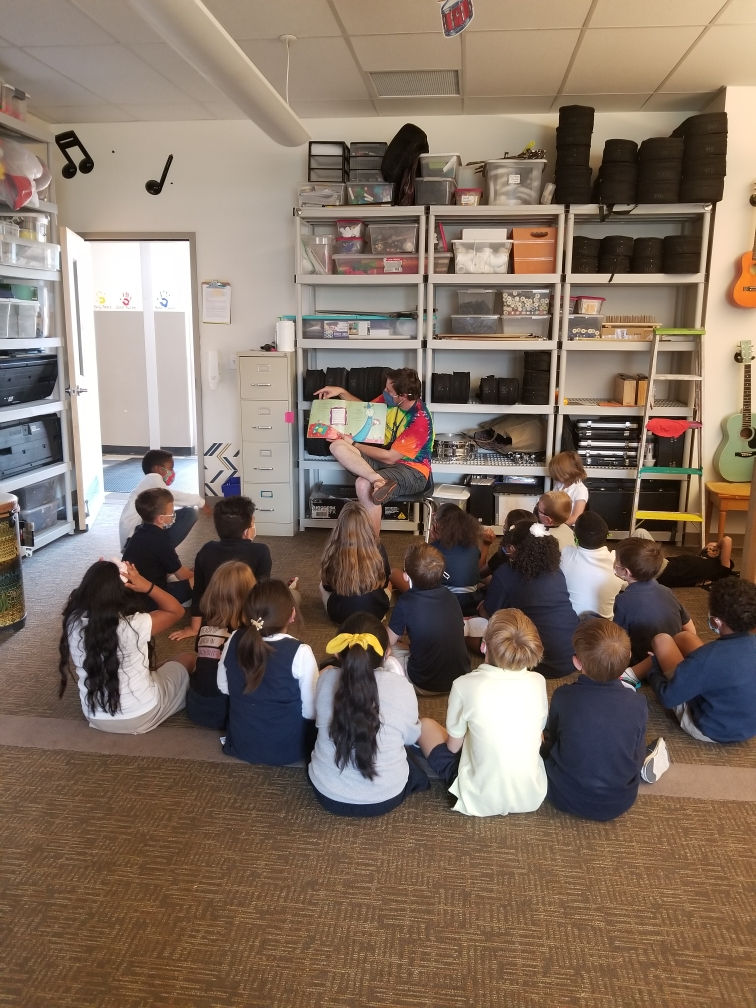
Well I have an update for you all. After 9 diligent years in education, I am leaving the industry and transitioning to full time writing, community-building, and other creative focused work. After seeing many, many students grow to become successful adults and future leaders, this feels like the right path.
Is it bittersweet? No, not really. Yes, I've seen so many young people grow. I have a multitude of stores from all over the globe, in multiple US states, in various institutions and manners of instruction. I've empowered children with disabilities, helping bridge the worlds of autism, ADHD, cerebral palsy, SLDs, traumatic brain injury, and a host of other backgrounds and challenges with a modern American education. I've mentored English-as-a-second-language students numerous times, narrowed boundaries between cultures both domestically and internationally, and taught students with violent criminal records and traumatic pasts, able to aid them out of the morasses they feel they face and into the light of day.
But now its time to move on.
Education in the United States has been in a steady, gradual decline since the time I left high school, and while peaks and troughs can be expected in most industries, the seemingly locked-in decline in education has put many students at a disadvantage. In addition to the beauty I just described, I've also seen so many students from broken homes, without good nutrition, wearing the same thing day in and day out, and despite YEARS of good intentions from Congress, these students not only remain unaided but are increasingly having their hands held, enforcing a dogma of "sleep at your desk and get a D" instead of allowing the child to fail. Based on my experiences in a very wide variety of American settings, from cities like Chicago and Denver, rural environments like Grand Junction, Loveland, and Fort Collins, and institutions like museums, schools, libraries, governments, and private education, I can see the effect this has. Students, when allowed to fail, explore, or learn by doing or falling forward, invariably succeed and feel a sense of accomplishment. When these students make a mistake, they learn to view it as an obstacle to be overcome, not an absolute end to their endeavors. By contrast, students, when consistently told they can only fail if they utterly do not attend, and allowed to receive a passing grade for meagre work that barely hits that standards, learn to see failure as somehow impossible or impractical, therefore NOT viewing it as an obstacle to be overcome and certainly NOT a part of normal life. Students in these environments, when given a low grade on an assignment, internalize failure. They see it as an abstract, not something that simply is. And over time the haves and the have-nots become separated not by strength of effort but by school district, red vs. blue states, and funding disbursed by neighborhood size, all factors the student can't control.
What's to be done about all of this? Nothing, it seems. Somehow in nearly 15 years, not only has pushback against these policies been met with limited structural change, but there seems to be no clear sign that this will happen at all. Everyone talks about school closures due to declining birth rates, and I wonder if this is the justification for Congress to move attention elsewhere. This administration's focus is foreign and domestic policy, whereas Biden wanted student loan changes and a re-normalization of old routines and even Trump in his first term hardly mentioned education. I think I loved what I did, but it was hard to continue under a national backdrop of disinterest from Washington. And at this stage, who knows when these reforms will take place. So much time is spent in partisan deadlock that it seems schoolchildren may have to wait to become educated.
So is it bittersweet? No. Unfortunately its not. While I've valued my time in education, and immensely treasured each and every one of my students regardless of anything, I'm not sure I can confidently say I'll miss teaching. But the impact? The difference you feel when an apathetic high schooler beams when they see a police dog as their guest speaker. The way you watch as a group of 4th graders race through mineral specimens at the Field Museum, matching flourite and galena to colored paper circles. The way you see a child with a muscle disorder stand up and try, time and again, despite his inability to control his legs and arms and the potential ridicule from his peers. That? That's timeless. That's what being an educator is really about.
So no, I will not be continuing in education as a career. I will be moving to more full-time creative work, doing things like finishing my graphic novel (now more of a comic) that I've talked so often about, building websites and working on marketing copy. That sort of thing. I will look to educate people, but probably in new ways or greater capacities than ever before. But deep down I will always look for the best in people, looking for those special moments when a lesson really hits home. A spoken word, a boost of morale, a lesson taught through doing. Those can be rich. Those can be valuable. And quite honestly, those will never be regulated by any governing body, no matter how much it seeks to control.
I still have yet to crystalize on a specific next career move but at least I know which directions to take. Making this change has also given me alot of time to reflect on what my creative priorities are, in order to better serve myself and the communities I am in.
See you soon,
Chris


Comments